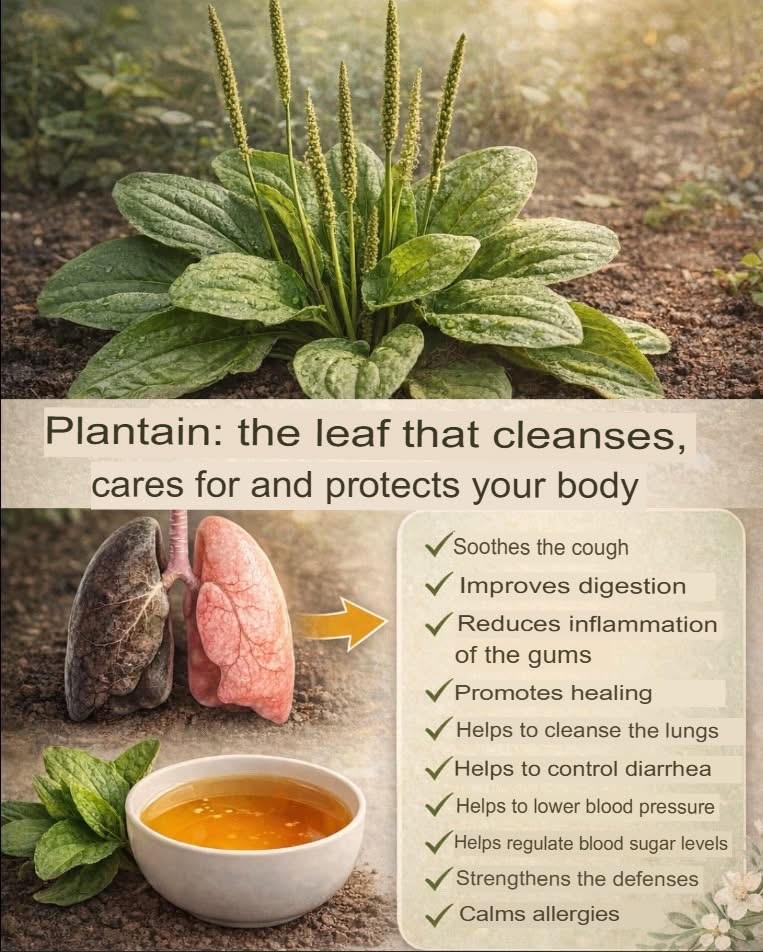

Plantain: The Humble Leaf with Powerful Healing Properties
The image you shared highlights plantain (not the banana-like fruit, but the common herbaceous plant often dismissed as a weed). Specifically, it refers to broadleaf plantain (Plantago major) or ribwort plantain (Plantago lanceolata), two species renowned in traditional medicine for centuries. The graphic claims it “cleanses, cares for, and protects your body,” listing benefits like soothing coughs, improving digestion, reducing inflammation, promoting healing, cleansing lungs, controlling diarrhea, lowering blood pressure, regulating blood sugar, strengthening defenses, and calming allergies.
While some claims have strong roots in traditional use and emerging scientific support, others remain preliminary or anecdotal. This article explores plantain’s history, science-backed benefits, uses, and precautions in depth. 0 “LARGE” 1 “LARGE”
*grok:render type=“render_searched_image”> 2 LARGE
*grok:render type=“render_searched_image”> 5 LARGE
*grok:render type=“render_searched_image”> 6 LARGE
Broadleaf plantain (Plantago major, top images) features wide, oval leaves forming a rosette. Ribwort plantain (Plantago lanceolata, bottom) has narrow, lance-shaped leaves with prominent veins.
Historical and Traditional Uses
Plantain has been a staple in folk medicine worldwide. Native Americans used it as a “white man’s footprint” remedy because it spread along European settlers’ paths. Traditional Persian Medicine employed it for coughs, wounds, constipation, and gastrointestinal issues. European herbalists applied poultices for insect bites, stings, and skin irritations. In Ayurveda and Chinese medicine, related species support digestion and respiratory health.
Its mucilaginous (gel-like) texture soothes irritated tissues, explaining its popularity for coughs and digestive complaints.
Key Active Compounds
Plantain leaves contain:
- Mucilage — Soothes and protects mucous membranes.
- Iridoid glycosides (like aucubin) — Anti-inflammatory and antimicrobial.
- Flavonoids (like apigenin) — Antioxidant and anti-inflammatory.
- Tannins — Astringent, helpful for diarrhea and wound healing.
- Phenolic acids (like caffeic acid) — Antioxidant effects.
These contribute to its therapeutic potential.
Evidence-Based Health Benefits
1. Soothing Coughs and Respiratory Issues
Plantain serves as an expectorant and demulcent, soothing dry coughs and irritation in bronchitis or upper respiratory infections. Clinical studies show Plantago major syrup reduces cough severity in acute bronchitis and improves lung function (FEV1 and FVC) in asthma. Traditional use for “cleansing the lungs” aligns with its mucilage coating irritated airways and aiding mucus expulsion. Evidence level: Strong traditional support with some clinical trials.
2. Improving Digestion and Controlling Diarrhea
Mucilage and tannins make plantain effective for digestive upset. It treats diarrhea, dysentery, stomach ulcers, and irritable bowel issues. Studies confirm antidiarrheal and antiulcerative properties. It also supports gut healing in inflammatory conditions. Evidence level: Well-supported in reviews and traditional use.
3. Reducing Inflammation (Including Gums)
Anti-inflammatory compounds reduce swelling in gums (gingivitis), skin, and internally. It treats mouth and throat inflammation. Evidence level: Good preclinical and traditional support.
4. Promoting Wound Healing
One of plantain’s best-documented uses: Fresh crushed leaves or extracts accelerate healing of wounds, burns, and ulcers. Clinical trials show efficacy in second-degree burns, diabetic foot ulcers, and pressure ulcers. Evidence level: Strong, with multiple clinical studies.
5. Helping Lower Blood Pressure and Regulate Blood Sugar
Some animal and preliminary human studies suggest hypotensive and hypoglycemic effects, potentially benefiting hypertension and diabetes. One trial on Plantago major seeds improved liver enzymes in nonalcoholic fatty liver disease, often linked to blood sugar issues. Evidence level: Promising but limited human data.
6. Calming Allergies and Strengthening Immune Defenses
Antioxidant and anti-inflammatory properties may help with allergies (e.g., hay fever). It shows immunomodulatory effects in lab studies. Evidence level: Mostly preclinical; traditional use for respiratory allergies.
Other Potential Benefits
- Antimicrobial against bacteria and viruses.
- Antioxidant protection.
- Topical relief for insect bites, eczema, and hemorrhoids. 3 “LARGE” 4 “LARGE”
Plantain leaf tea or infusion — A common way to consume it internally.
How to Use Plantain
- Tea/Infusion → Steep 1-2 tsp dried leaves in hot water for 10-15 minutes. Drink for coughs or digestion (up to 3 cups daily).
- Poultice → Crush fresh leaves and apply to wounds, bites, or inflammation.
- Syrup/Tincture → Commercial products for respiratory support.
- Topical Cream → For skin issues.
Forage responsibly: Identify correctly and avoid polluted areas.
Side Effects and Precautions
Plantain is generally safe. Rare side effects include mild diarrhea, low blood pressure, or allergic skin reactions. Avoid during pregnancy (may stimulate uterus). Consult a doctor if on medications (e.g., lithium, blood sugar/pressure drugs) or with allergies to related plants.
Conclusion
Plantain earns its reputation as a versatile healer. Strong evidence supports wound healing, cough relief, digestive aid, and anti-inflammatory effects, while blood sugar/pressure benefits need more research. This “weed” offers natural support—consult a healthcare professional for serious conditions.
If you’d like recipes, more studies, or details on a specific benefit, let me know!