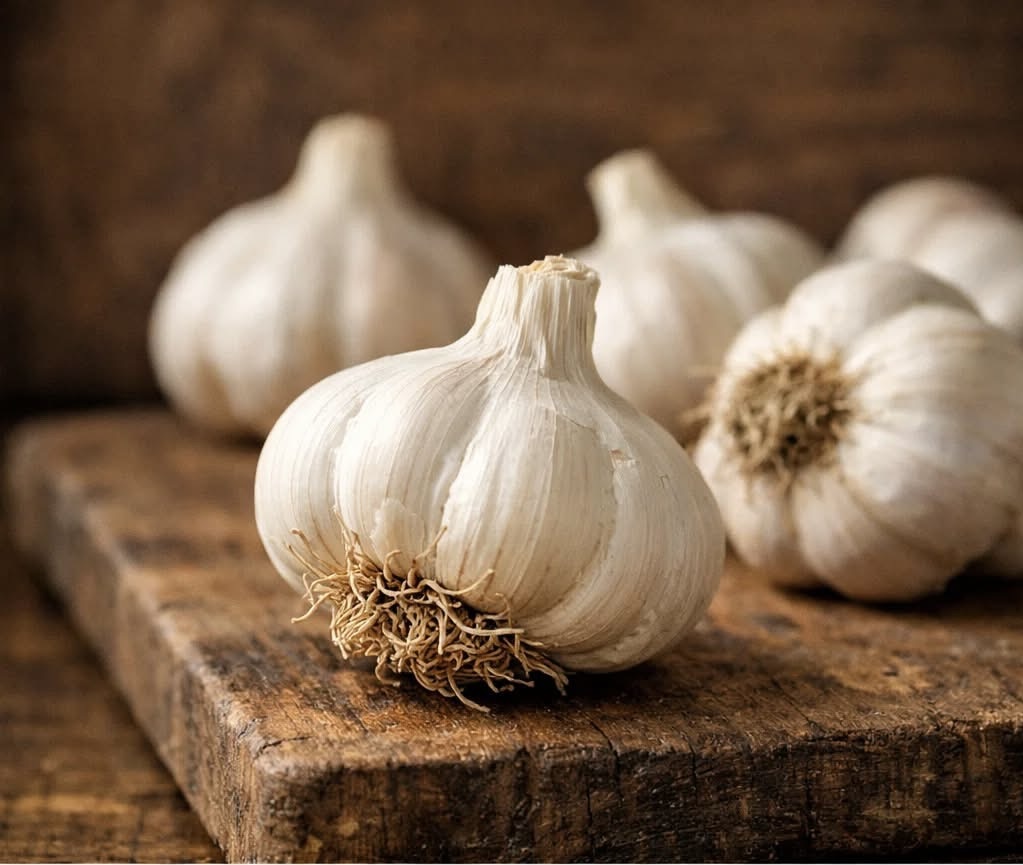

that garlic kills 14 types of bacteria and 13 types of infections — is a popular one that circulates widely on social media and health posts. It appears to originate from (or be inspired by) scientific studies on garlic’s antimicrobial properties, particularly one older reference to garlic oil showing activity against 14 enteric pathogens (disease-causing gut bacteria) in lab tests.
Is the claim accurate?
Not quite in the exact way it’s phrased. Garlic (especially fresh/crushed garlic) does have impressive broad-spectrum antibacterial effects, mainly thanks to a powerful compound called allicin (produced when you crush or chop garlic). However:
• Scientific studies show garlic/alicin inhibits or kills many types of bacteria
both Gram-positive (e.g., Staphylococcus aureus, Streptococcus) and Gram-negative (e.g., E. coli, Salmonella, Pseudomonas, Klebsiella), including some multi-drug resistant strains like MRSA.
• One specific study (from around 2001) reported garlic oil active against 14 enteric pathogens (bacteria that cause gut-related infections) and 11 commensal (normal gut) bacteria.
• Other studies mention activity against 5–11 specific strains in oral/dental contexts, or broad effects against groups like MDR E. coli, Pseudomonas aeruginosa, and more.
• There’s no widely accepted scientific source listing exactly “14 types of bacteria and 13 types of infections” as a fixed, proven number. The “13 types of infections” part seems exaggerated or simplified from garlic’s traditional uses and lab evidence against various pathogens.
Garlic is not a magic bullet that “kills” all these in the human body the same way antibiotics do — its effects are stronger in lab dishes (in vitro) than inside the body, where factors like digestion, concentration, and bioavailability reduce potency.
Here are some real examples of bacteria that research has shown garlic/alicin can inhibit or affect strongly:
• Escherichia coli (including resistant strains)
• Staphylococcus aureus (including MRSA)
• Salmonella species
• Pseudomonas aeruginosa
• Klebsiella pneumoniae
• Streptococcus mutans (linked to tooth decay)
• Helicobacter pylori (stomach ulcers — mixed results in humans)
• Others like Shigella, Proteus, Bacillus, and more
Garlic also shows antifungal (e.g., against Candida), antiparasitic, and some antiviral effects in studies.
Practical takeaway
Fresh, raw, or lightly crushed garlic is best for maximum allicin. Eating it regularly may support immune health and help fight minor infections, but don’t rely on it alone for serious bacterial infections
see a doctor and use prescribed antibiotics when needed.
Garlic is a fantastic natural ally with solid science behind its antimicrobial reputation, just not quite the precise “14 + 13” magic number.