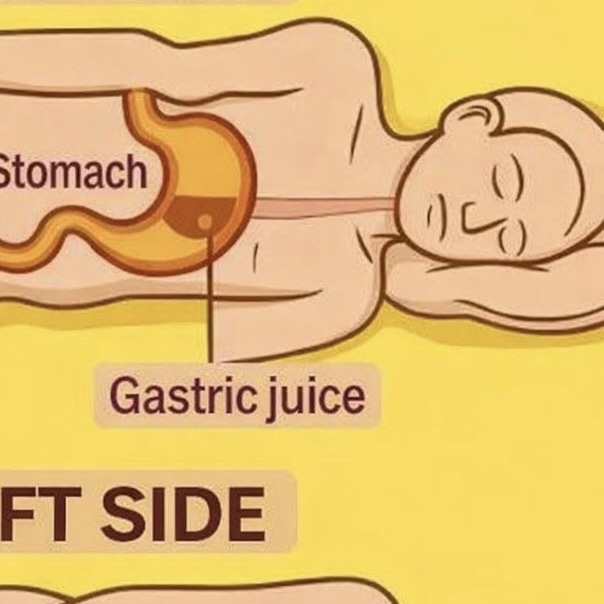

You’ve probably heard that sleep quality matters more than quantity—but what if the way you sleep is just as important as how long you sleep?
Enter left-side sleeping.
It’s not a new wellness trend or a fad. It’s a gentle, science-backed shift that may help your body rest, digest, and recover more effectively overnight.
Why Left-Side Sleeping Works with Your Body
Your internal organs aren’t symmetrical—and neither should your sleep position be.
When you lie on your left side, you align with your body’s natural anatomy, allowing gravity to support key functions.
- Eases Digestion and Reduces Acid Reflux
The stomach and pancreas rest naturally on the left side of the body.
In this position, stomach acid stays lower, and food moves more smoothly through the digestive tract. The lower esophageal sphincter, the valve between the stomach and esophagus, remains above stomach contents, which can help reduce nighttime heartburn.
Studies suggest left-side sleeping may reduce acid reflux symptoms compared to right-side or back sleeping.
- Supports Lymphatic Drainage
The thoracic duct, the main vessel of the lymphatic system, is located on the left side.
Sleeping on your left may help your body more efficiently clear waste, toxins, and excess fluid while you rest.
- Promotes Heart Health
While research is ongoing, some experts suggest left-side sleeping may reduce pressure on the heart and improve circulation. This position is often recommended during pregnancy to support healthy blood flow.
- May Reduce Snoring and Sleep Apnea Symptoms
Side sleeping, whether left or right, keeps airways more open than back sleeping. This can help reduce snoring and mild sleep apnea symptoms.
How to Make the Switch Without Frustration
If you’re used to sleeping on your back, right side, or stomach, switching takes practice.
Try these tips:
Use a body pillow. Hug one in front and place one behind your back to prevent rolling over.
Elevate your head slightly. An extra pillow or wedge can help keep stomach acid down.
Place a pillow between your knees. This aligns the hips and reduces lower back strain.
Start with naps. Practice left-side sleeping during daytime rest first.
Be patient. It can take one to two weeks to adjust.
Avoid stomach sleeping, as it strains the neck and spine and may worsen reflux.
Who Should Be Cautious
Left-side sleeping is safe for most people, but consult your doctor if you have:
Severe heart failure, as some individuals feel more comfortable on the right side.
Shoulder pain on the left side.
Glaucoma, since side sleeping may increase eye pressure. Back sleeping may be recommended instead.
Final Thought
You don’t need a new mattress or expensive supplements to improve your sleep.
Sometimes, the simplest change—rolling onto your left side—can make your nights calmer and your mornings brighter.
Great sleep isn’t just about closing your eyes. It’s about giving your body the quiet support it needs to restore itself while you rest.
Rest well. Your body is working hard, even when you’re not.