
Introduction
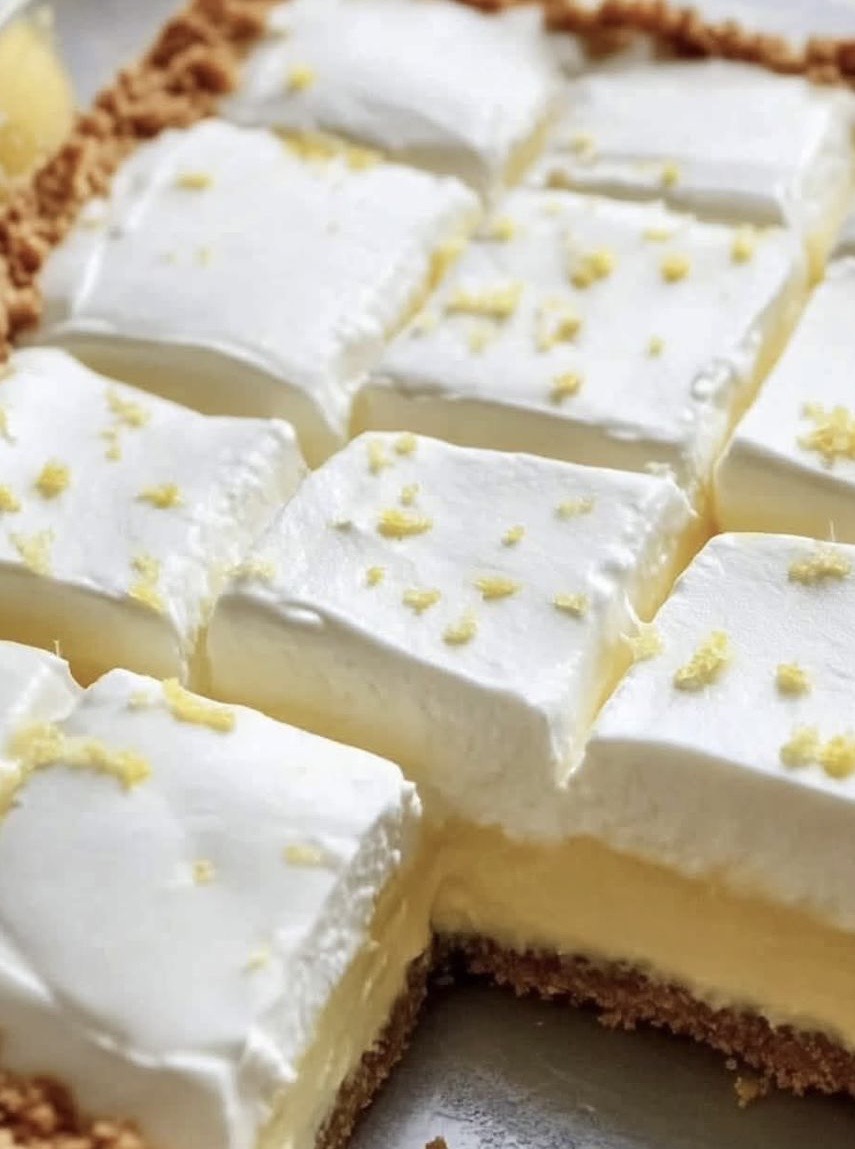
This dessert is a creamy lemon cream pie bar with a buttery biscuit crust and a soft whipped topping. It combines the freshness of citrus with the comfort of a classic custard-style filling. It is designed to be served in squares, making it perfect for family tables, celebrations, and sharing moments with people you love. Its smooth layers and bright flavor make it both elegant and comforting at the same time.
Ingredients
For the crust you need two cups crushed digestive biscuits or graham crackers, half a cup melted butter, and two tablespoons sugar. For the filling you need one can sweetened condensed milk, three egg yolks, half a cup fresh lemon juice, and one tablespoon lemon zest. For the topping you need one cup heavy whipping cream, two tablespoons powdered sugar, and extra lemon zest for garnish.
Instructions
First prepare the crust by mixing the crushed biscuits with melted butter and sugar until fully coated. Press the mixture firmly into the bottom of a baking dish to form an even layer. Bake at 180 degrees Celsius for ten minutes, then let it cool slightly. In a bowl, whisk the condensed milk, egg yolks, lemon juice, and lemon zest until smooth and thick. Pour this mixture over the warm crust and return to the oven for fifteen minutes until the filling is set. Remove from the oven and let it cool completely. Whip the cream with powdered sugar until soft peaks form, then spread it evenly over the cooled filling. Refrigerate for at least two hours before cutting into squares.
Methods
This recipe uses the baking method for the crust and filling to create a firm base and stable lemon layer. The topping is made using the whipping method to add lightness and contrast. Chilling is used as a final method to allow the layers to firm up and blend in flavor. The balance of baking and chilling creates the perfect texture between creamy and structured.
History
Lemon custard desserts have existed for centuries, especially in European kitchens where citrus was prized for its freshness and preserving qualities. Lemon pies became popular in the nineteenth century with the availability of condensed milk. The bar version developed later as home cooks adapted pies into tray-baked desserts for easier serving and transport. Today, lemon bars and lemon cream pies are loved worldwide for their refreshing taste.
Benefits
This dessert provides vitamin C from fresh lemon juice and zest, which supports immunity. Eggs contribute protein, while dairy adds calcium for bone health. The bright citrus flavor can help digestion and reduce the feeling of heaviness after meals. When enjoyed in moderation, it offers both pleasure and small nutritional value.
Formation
The formation of this dessert occurs in three clear layers. The base forms from baked biscuit crumbs that harden into a supportive crust. The middle layer forms when eggs and condensed milk react with lemon juice, thickening naturally during baking. The top layer forms from whipped cream that traps air, creating a light and soft finish. Together, these layers create a visual and textural harmony.
Nutrition
Each serving provides carbohydrates from the crust, fats from butter and cream, and protein from eggs and milk. It contains natural sugars from condensed milk and added sugar from the crust and topping. Lemon contributes small amounts of potassium and antioxidants. Approximate values per serving are around 280 calories, 15 grams fat, 32 grams carbohydrates, and 5 grams protein.
Conclusion with lovers
This lemon cream pie bar is more than a dessert; it is a shared experience. Its soft texture and bright taste bring people together around the table, creating sweet memories for lovers of citrus desserts. Whether served at family gatherings or romantic evenings, it speaks the language of comfort and freshness. Lovers of simple yet elegant sweets will always return to this recipe, because it combines tradition, flavor, and emotion in every square.
