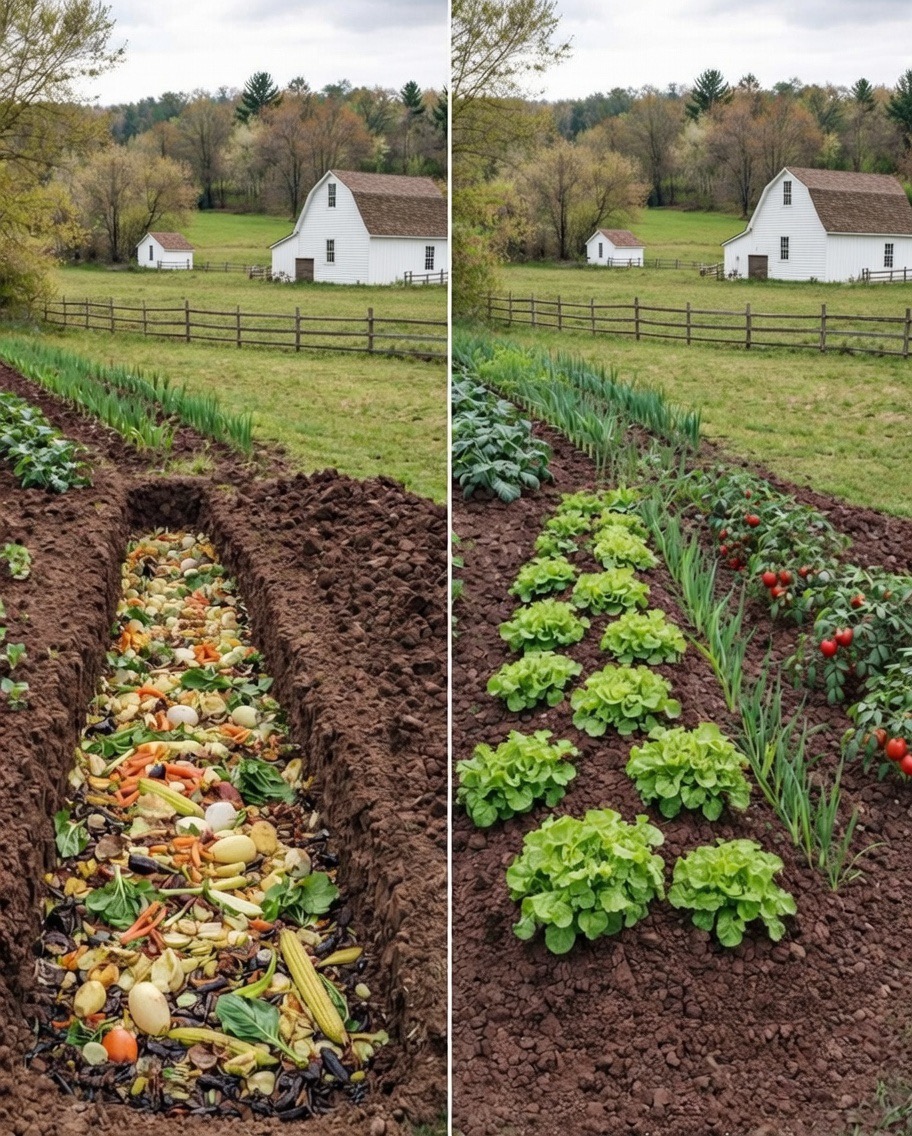

In the fight against food waste, a powerful solution is hiding right in your kitchen: food scraps. Instead of sending them to the landfill—where they contribute to methane emissions and environmental harm—why not transform them into free, nutrient-rich resources for your garden? With a few simple methods, you can turn everyday kitchen leftovers into “black gold” that nourishes your soil and helps grow healthier, more productive plants. Let’s explore some of the most effective and creative ways to repurpose those scraps.
Composting
Composting remains one of the best and most widely used ways to recycle food scraps. By building a compost pile or using a bin, you let natural decomposition turn kitchen waste into rich, nutrient-dense soil amendment. Add fruit and vegetable peels, coffee grounds, eggshells, tea bags, and even shredded paper or cardboard. As the materials break down, they release essential nutrients, improve soil structure, enhance water retention, and support beneficial microbes—giving your plants a major boost.
Vermicomposting
If space is limited or you live in an apartment or urban setting, vermicomposting is an excellent compact alternative. Using red wiggler worms in a small bin (which can stay indoors or on a balcony), you can convert food scraps into high-quality worm castings—some of the richest natural fertilizer available. The worms quickly process scraps like vegetable trimmings, coffee grounds, and fruit peels (avoiding excessive citrus or meat/dairy), producing odor-free, nutrient-packed castings perfect for potted plants, raised beds, or garden soil.
Direct Regrowing (or Propagation)
Some scraps can be regrown directly into new plants—no composting required! Plant the base of celery, lettuce, green onions, or leeks in water or soil to sprout fresh leaves and stalks. Carrot, beet, and turnip tops can produce edible greens when replanted. You can also save seeds from tomatoes, peppers, squash, or pumpkins and sow them to grow entirely new plants. This zero-waste approach not only cuts down on trash but gives you an ongoing supply of fresh produce straight from your garden.
Mulching
Chop or scatter food scraps directly on the soil surface as a natural mulch. Fruit peels, vegetable trimmings, coffee grounds, and eggshells work well when spread around plants. As they break down, they slowly release nutrients, suppress weeds, retain soil moisture, moderate temperature, and reduce evaporation. This simple method creates a fertile, living mulch layer that supports stronger root systems and more resilient plants.
Rather than seeing food scraps as garbage, treat them as valuable assets for your garden and the planet. Whether you choose composting, vermicomposting, regrowing, mulching, or a combination of these, you’ll reduce landfill waste, cut greenhouse gas emissions, and enjoy healthier soil and bigger harvests. Next time you’re about to toss those scraps, pause and give them a second life in your garden—you’ll be amazed at the results
