
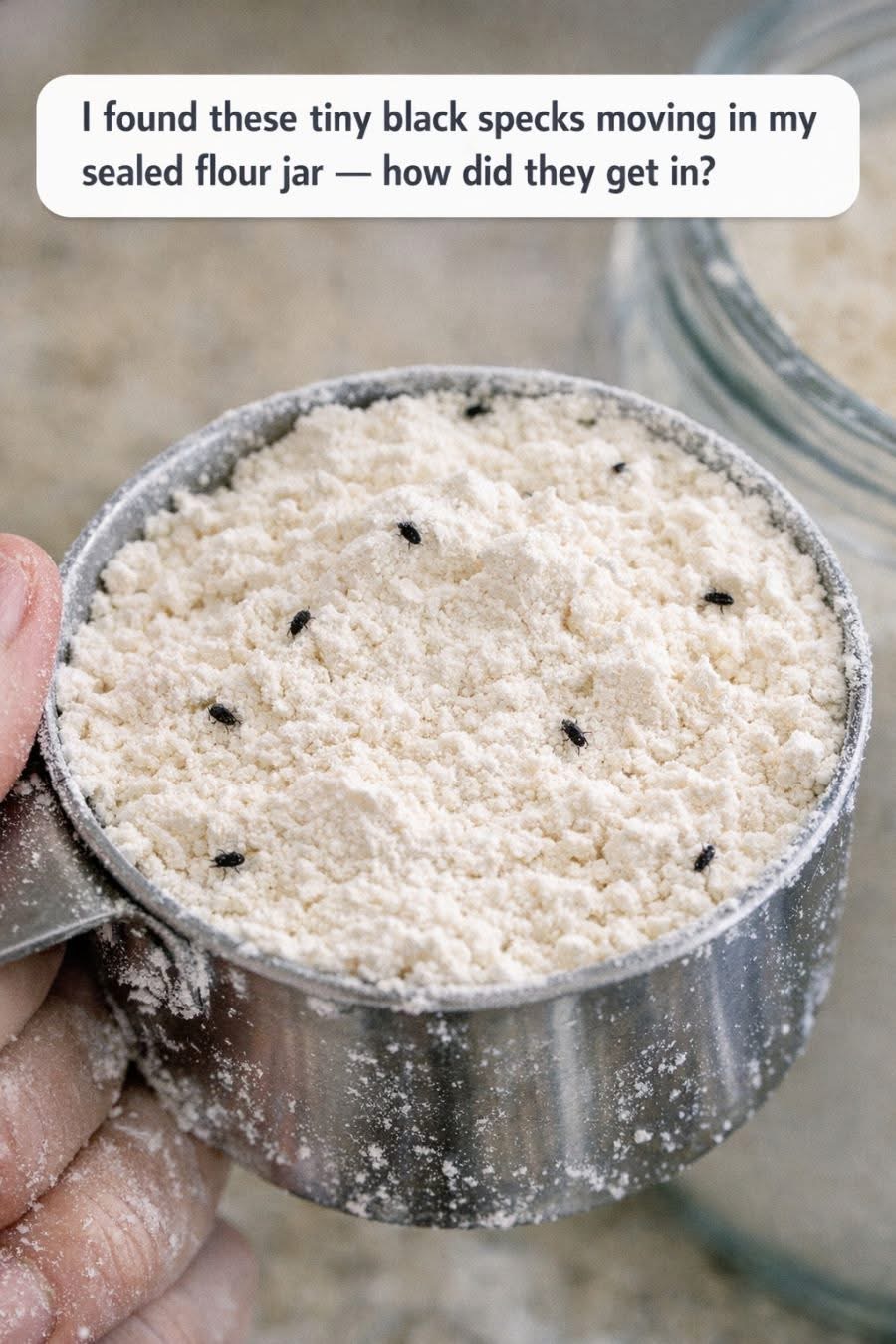
Discovering tiny black specks moving in your sealed flour jar can be unsettling, especially if you were about to embark on a baking project. These unexpected guests might make you wonder how they managed to infiltrate a seemingly secure environment and what they could mean for your kitchen’s hygiene.
It’s not uncommon for people to find these unwelcome visitors in their flour. Understanding what they are and how they get into your pantry is crucial for maintaining a clean and safe cooking space. This article delves into the specifics of these tiny invaders, how they manage to get past the defenses of even sealed containers, and what steps you can take to prevent future infestations.
- What Those Tiny Black Specks in Your Flour Really Are
The tiny black specks you see in your flour are likely flour weevils or similar pantry pests. These insects are small, typically measuring around 2 to 3 millimeters in length, and are known for their ability to infest stored food products. Weevils are not actually born inside the flour; instead, they enter as eggs laid by adult weevils on the grain before it is processed into flour. The most common types of weevils found in flour are the granary weevil and the rice weevil, both of which have distinctive elongated bodies and are well-adapted to living in stored grain products.
While the sight of weevils can be off-putting, they are not harmful to humans if accidentally consumed. However, they can cause significant damage to stored grains and other pantry items over time, making it essential to address an infestation promptly. - How Flour Weevils Sneak In Before the Jar Is Even Sealed
Flour weevils often enter your pantry long before you notice them. The infestation usually begins at the processing or packaging stage, where weevils lay eggs on the grain that is later milled into flour. These eggs are tiny and nearly invisible to the naked eye, making it easy for them to go unnoticed. Once the eggs hatch, the larvae consume the flour and grow into adult weevils.
Because the infestation starts at the source, simply transferring flour into a sealed jar after purchase may not be enough to prevent the emergence of weevils. The eggs can survive the transfer and hatch inside the sealed container if not dealt with promptly. - The Life Cycle Happening Quietly Inside Your Flour
The life cycle of a flour weevil begins with an adult female laying tiny eggs directly onto the grain or flour surface. These eggs are incredibly small, often just a fraction of a millimeter in size, and can go unnoticed even during packaging. Within a few days to a couple of weeks, these eggs hatch into larvae, which begin to feed on the flour.
The larval stage is where most of the damage occurs, as they consume the flour and grow. After several weeks, the larvae pupate and transform into adult weevils, ready to continue the cycle by laying more eggs. Under optimal conditions, the entire life cycle from egg to adult can complete in as little as four weeks, allowing populations to grow rapidly if not controlled. - Why a ‘Sealed’ Jar Isn’t Always the Protection You Think
While sealing flour in a jar can help prevent new infestations, it does not address existing eggs or larvae already present in the flour. These pests are adept at surviving in low-oxygen environments, allowing them to continue their life cycle even in sealed conditions.
Moreover, some containers may not be as airtight as they appear. Tiny gaps in the lid or imperfections in the seal can allow adult weevils to enter or exit, exacerbating the problem. It’s crucial to use containers specifically designed for airtight storage when trying to protect your pantry staples. - Telltale Signs Your Flour Is Infested (Beyond Just Seeing Bugs)
Beyond noticing visible insects, there are several other signs that your flour may be infested with weevils. You might detect an unusual odor, as infested flour can develop a musty or sour smell. The texture of the flour may also change, becoming clumpy or containing small tunnels where larvae have been feeding.
Another indicator is the presence of fine webbing, which can be a sign of an advanced infestation. This webbing is produced by the larvae as they move through the flour. If you notice any of these signs, it’s a good idea to thoroughly inspect your pantry for other affected items and take immediate action. - Is It Dangerous If You’ve Already Eaten Some?
Consuming flour that contains weevils or their larvae is generally not harmful to humans. These insects do not carry diseases that affect humans, and ingesting a small number of them is unlikely to cause any health issues. However, it is understandably unappetizing and may affect the taste and quality of your food.
If you’ve consumed infested flour, there’s no need for panic. However, it’s advisable to dispose of any visibly contaminated products to prevent further spread and to maintain the quality of your meals. - Exactly What To Do With Contaminated Flour
If you discover that your flour is infested with weevils, the best course of action is to dispose of it immediately. Seal the contaminated flour in a bag to prevent weevils from spreading to other pantry items, and dispose of it outside your home.
After removing the contaminated flour, clean the storage container thoroughly with hot, soapy water to eliminate any remaining eggs or larvae. It’s also beneficial to inspect nearby pantry items to ensure they have not been affected, as weevils can easily spread to other food products. - How To Deep-Clean Your Pantry After an Infestation
To effectively clean your pantry after an infestation, remove all items and inspect them for signs of weevils. Vacuum shelves and corners to remove any hidden eggs or insects. Pay special attention to cracks and crevices where eggs might be lurking.
After vacuuming, use a mixture of water and vinegar or a mild bleach solution to wipe down all surfaces. This will help sanitize the area and deter future infestations. Allow the pantry to dry completely before returning food items, ensuring all containers are clean and sealed tightly. - Smart Shopping Habits That Stop Weevils at the Store
Preventing weevils starts with smart shopping habits. Inspect packages of flour and other grains for tears or damage before purchasing. Opt for brands known for rigorous quality control and packaging integrity.
Consider buying smaller quantities of flour and grains to ensure they are used quickly, minimizing the chance for infestations to develop. Also, check expiration dates and choose products with the longest shelf life possible, as fresher products are less likely to harbor pests. - Storage Tricks to Keep Future Bugs Out of Your Baking Supplies
Proper storage is key to preventing future infestations. Use airtight containers made of glass, metal, or heavy-duty plastic, as these materials are more difficult for pests to penetrate. Consider freezing flour for 48 hours upon purchase to kill any potential eggs or larvae.
Store grains and flour in cool, dry places, as weevils thrive in warm, humid environments. Regularly clean your pantry and rotate stock to use older items first, reducing the opportunity for pests to establish themselves. - When to Call in Professional Help for a Persistent Problem
If you find that despite your best efforts, weevils or other pantry pests continue to be a problem, it may be time to seek professional pest control assistance. Persistent infestations could indicate a larger issue that requires specialized treatment.
Professional exterminators can offer targeted solutions and advice tailored to your specific situation, ensuring that all sources of infestation are addressed effectively. They can also provide long-term prevention strategies to keep your pantry pest-free.